
What Global Buyers Actually Look for Before Shortlisting an Indian Supplier
INSEAIR EXPORT DESK
1/15/20261 min read
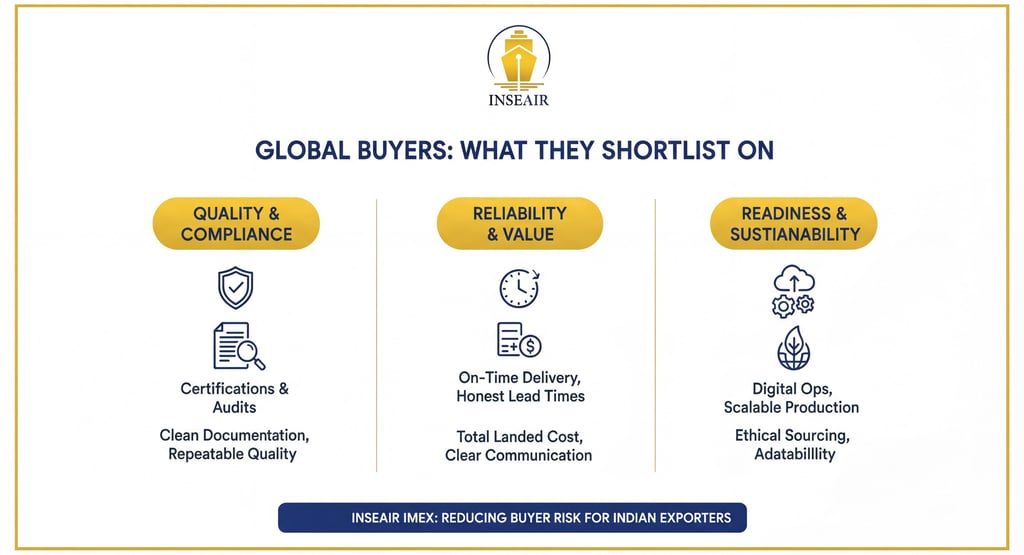
Global buyers do not shortlist Indian suppliers based on price alone anymore. Price opens the door, but reliability decides who gets in. Buyers first look for hard proof of quality and compliance. Certifications, audit readiness, and clean documentation matter more than sales pitches. They want to know the factory can deliver the same quality every time, at scale, without surprises. Timelines are equally critical. Honest lead times, consistent dispatches, and predictable execution are now treated as basic entry requirements, not differentiators.
Once quality and delivery are cleared, buyers focus on value, not cheapness. They look at total landed cost, risk exposure, and how easy it is to do business. Clear communication plays a big role here. Fast replies, complete specifications, and upfront clarity on MOQs, pricing, and Incoterms build trust quickly. Suppliers who delay responses or share partial information usually drop off the list early. Buyers today expect Indian suppliers to operate at the same communication standard as suppliers in Europe or East Asia.
Operational readiness is another filter buyers apply before shortlisting. Digital documentation, traceable shipments, and the ability to scale production without disruption are closely reviewed. After recent global supply shocks, buyers also test flexibility. They want to see backup capacity, alternate sourcing options, and the ability to adapt contracts if demand changes. Sustainability has moved into this same bucket. Ethical sourcing, environmental compliance, and traceability are no longer optional, especially for EU and large institutional buyers.
This is where INSEAIR IMEX operates with a clear niche. We help Indian manufacturers present themselves the way global buyers actually evaluate suppliers. That includes structuring compliance, sharpening buyer-facing profiles, validating export readiness, and managing buyer communication end to end. Our role is not to sell promises, but to reduce buyer risk. When suppliers align with how buyers think, shortlisting becomes easier, faster, and more repeatable.